
Guide · 11 pages · about 6 minutes
Digital Advertising for B2B. A Beginner’s Guide
What digital advertising actually does for a B2B company, the paid media formats explained without jargon, from content syndication and programmatic display to retargeting and account based targeting on LinkedIn, how to budget and measure it, and where to start. Free to read here, or download the PDF.
Introduction
Almost every article about digital advertising was written for someone selling shoes. Or makeup. Or wallets. Fair enough, that’s where the money is.
The problem is what all of it assumes: a huge audience, a fast decision, a purchase made before the tab closes. You have none of that. Your buyers are a few hundred people, maybe a few thousand. They take months. Three of them have to agree, and one of them is in finance.
So the usual playbook needs adjusting.
What ads actually do for you
They make you familiar.
That’s it, and it’s worth more than it sounds.
The goal is for the right people to have seen your name before they start shopping, and to keep seeing it while they compare options. When someone finally books a call, the ads are a big part of why you made the shortlist at all.
What ads won’t do.
They won’t produce signed contracts in week three. Companies that expect that tend to pull the plug right around the time things start working.
The formats, without the jargon
Content syndication
You have a guide, a report, or a webinar recording. Somebody else has an audience that wants it. Content syndication is that trade: a publisher or industry media partner puts your asset in front of their readers, and you get the contact details of everyone who downloads it.
You’re buying leads instead of clicks. Somebody handed over their email address for something in your subject area, which beats a banner impression. It also reaches people who will never see your ads, because they’re reading a trade publication instead of scrolling LinkedIn.
Two warnings. These leads are early, and if your reps call them like an inbound demo request they’ll burn the list by Thursday. And syndication distributes content, it doesn’t create it.
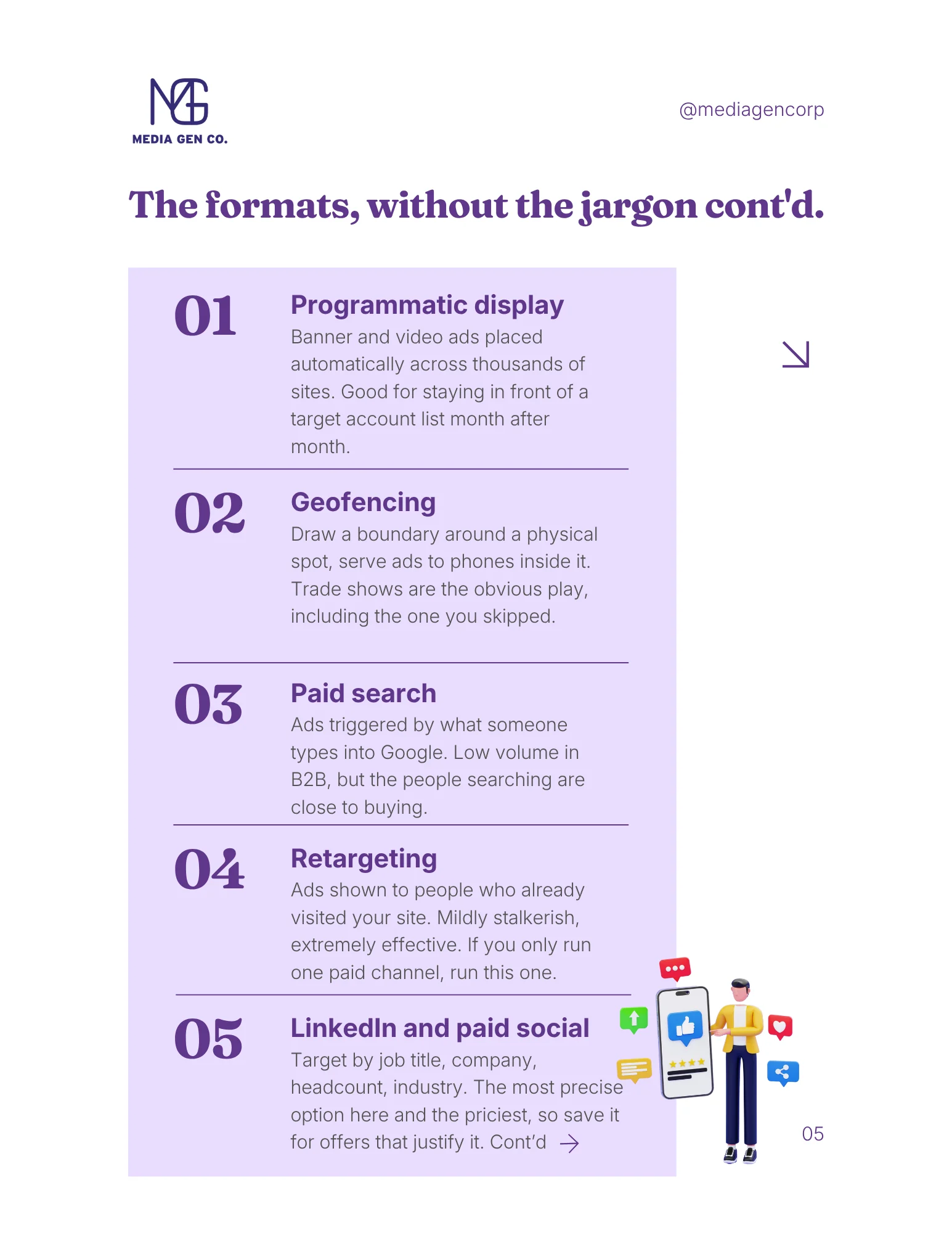
Programmatic display
Banner and video ads placed automatically across thousands of sites. Good for staying in front of a target account list month after month.
Geofencing
Draw a boundary around a physical spot, serve ads to phones inside it. Trade shows are the obvious play, including the one you skipped.
Paid search
Ads triggered by what someone types into Google. Low volume in B2B, but the people searching are close to buying.
Retargeting
Ads shown to people who already visited your site. Mildly stalkerish, extremely effective. If you only run one paid channel, run this one.
LinkedIn and paid social
Target by job title, company, headcount, industry. The most precise option here and the priciest, so save it for offers that justify it.
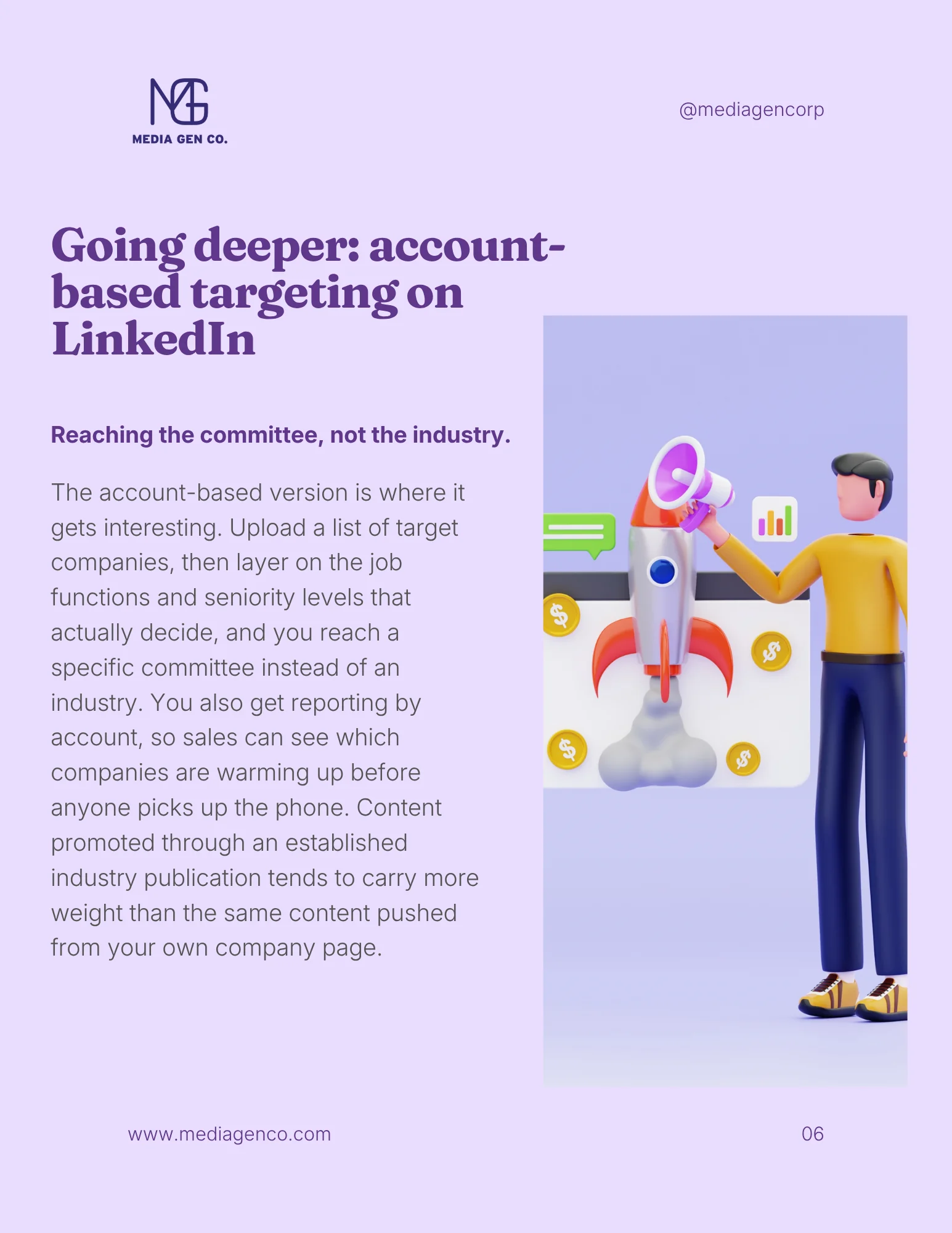
Going deeper: account-based targeting on LinkedIn
Reaching the committee, not the industry.
The account-based version is where it gets interesting. Upload a list of target companies, then layer on the job functions and seniority levels that actually decide, and you reach a specific committee instead of an industry. You also get reporting by account, so sales can see which companies are warming up before anyone picks up the phone. Content promoted through an established industry publication tends to carry more weight than the same content pushed from your own company page.
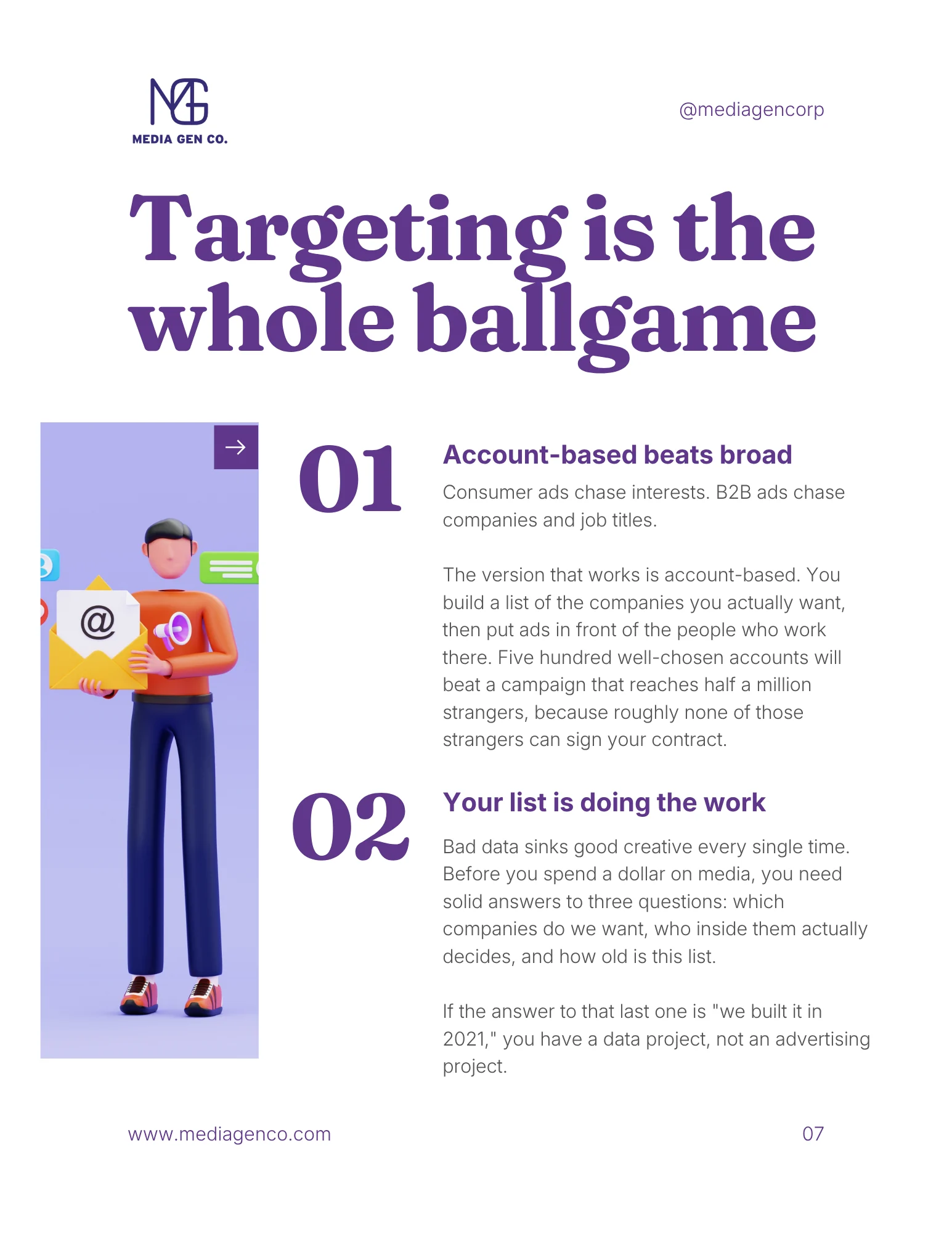
Targeting is the whole ballgame
Account-based beats broad
Consumer ads chase interests. B2B ads chase companies and job titles.
The version that works is account-based. You build a list of the companies you actually want, then put ads in front of the people who work there. Five hundred well-chosen accounts will beat a campaign that reaches half a million strangers, because roughly none of those strangers can sign your contract.
Your list is doing the work
Bad data sinks good creative every single time. Before you spend a dollar on media, you need solid answers to three questions: which companies do we want, who inside them actually decides, and how old is this list.
If the answer to that last one is “we built it in 2021,” you have a data project, not an advertising project.
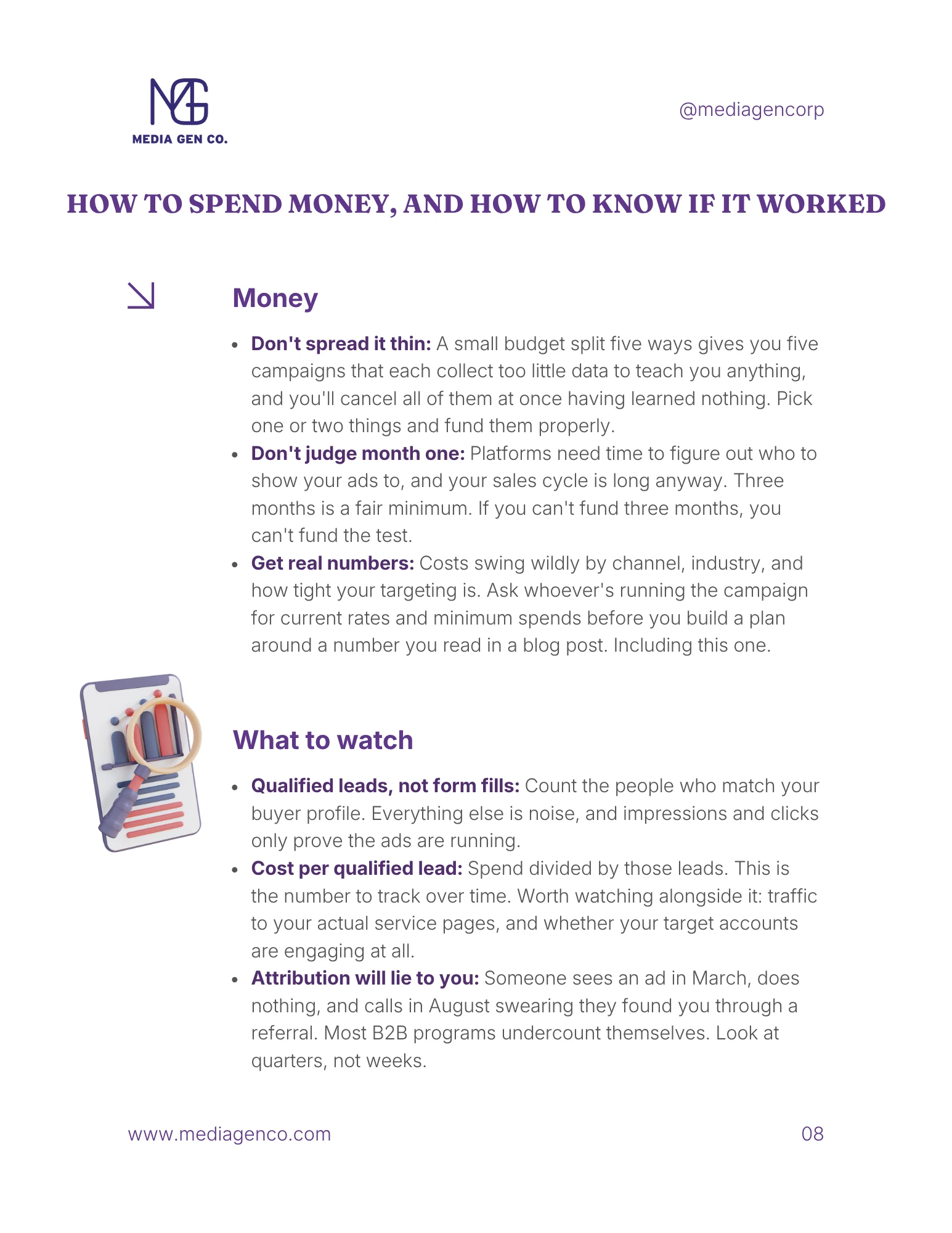
How to spend money, and how to know if it worked
Money
- Don’t spread it thin: A small budget split five ways gives you five campaigns that each collect too little data to teach you anything, and you’ll cancel all of them at once having learned nothing. Pick one or two things and fund them properly.
- Don’t judge month one: Platforms need time to figure out who to show your ads to, and your sales cycle is long anyway. Three months is a fair minimum. If you can’t fund three months, you can’t fund the test.
- Get real numbers: Costs swing wildly by channel, industry, and how tight your targeting is. Ask whoever’s running the campaign for current rates and minimum spends before you build a plan around a number you read in a blog post. Including this one.
What to watch
- Qualified leads, not form fills: Count the people who match your buyer profile. Everything else is noise, and impressions and clicks only prove the ads are running.
- Cost per qualified lead: Spend divided by those leads. This is the number to track over time. Worth watching alongside it: traffic to your actual service pages, and whether your target accounts are engaging at all.
- Attribution will lie to you: Someone sees an ad in March, does nothing, and calls in August swearing they found you through a referral. Most B2B programs undercount themselves. Look at quarters, not weeks.
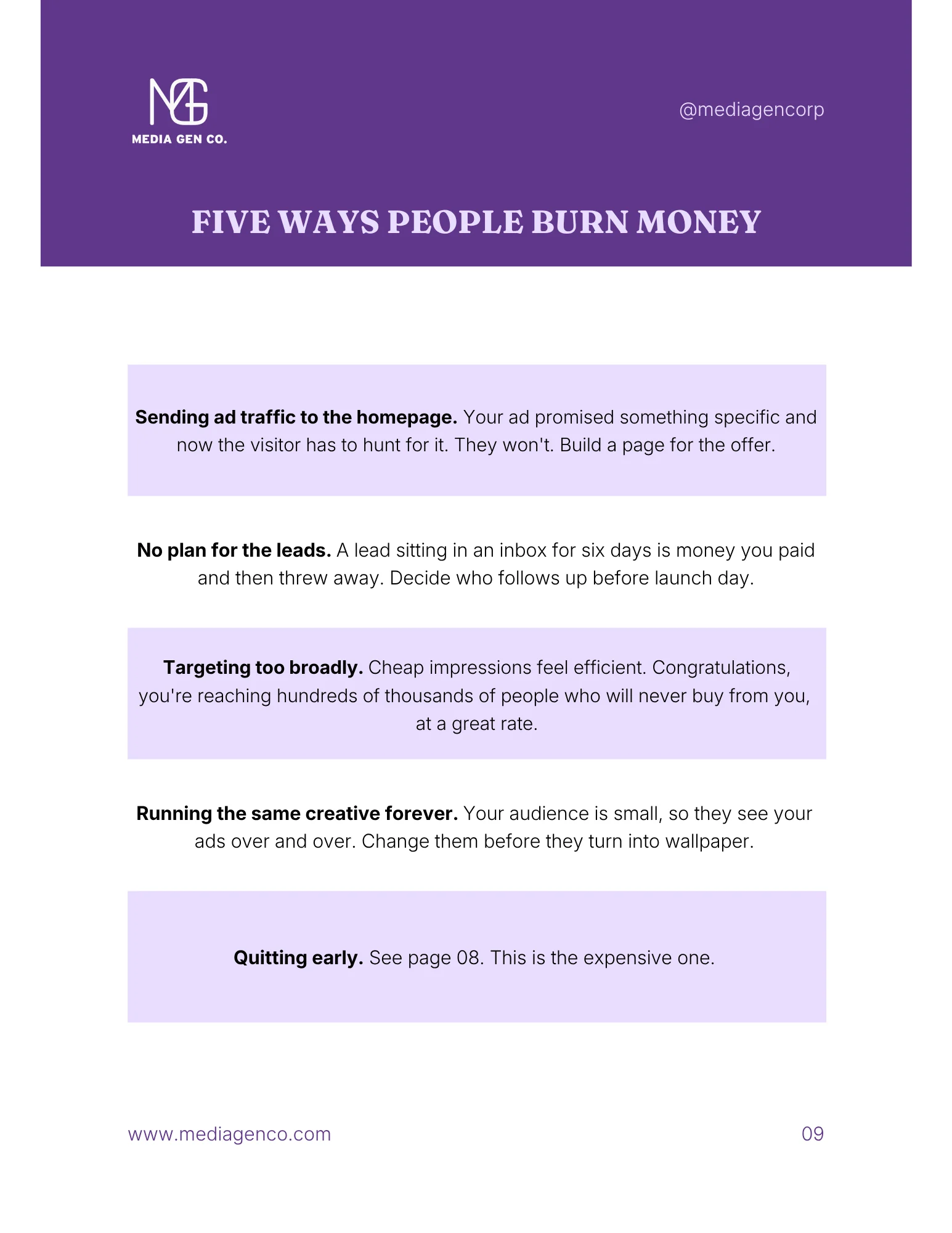
Five ways people burn money
- Sending ad traffic to the homepage. Your ad promised something specific and now the visitor has to hunt for it. They won’t. Build a page for the offer.
- No plan for the leads. A lead sitting in an inbox for six days is money you paid and then threw away. Decide who follows up before launch day.
- Targeting too broadly. Cheap impressions feel efficient. Congratulations, you’re reaching hundreds of thousands of people who will never buy from you, at a great rate.
- Running the same creative forever. Your audience is small, so they see your ads over and over. Change them before they turn into wallpaper.
- Quitting early. See page 08. This is the expensive one.
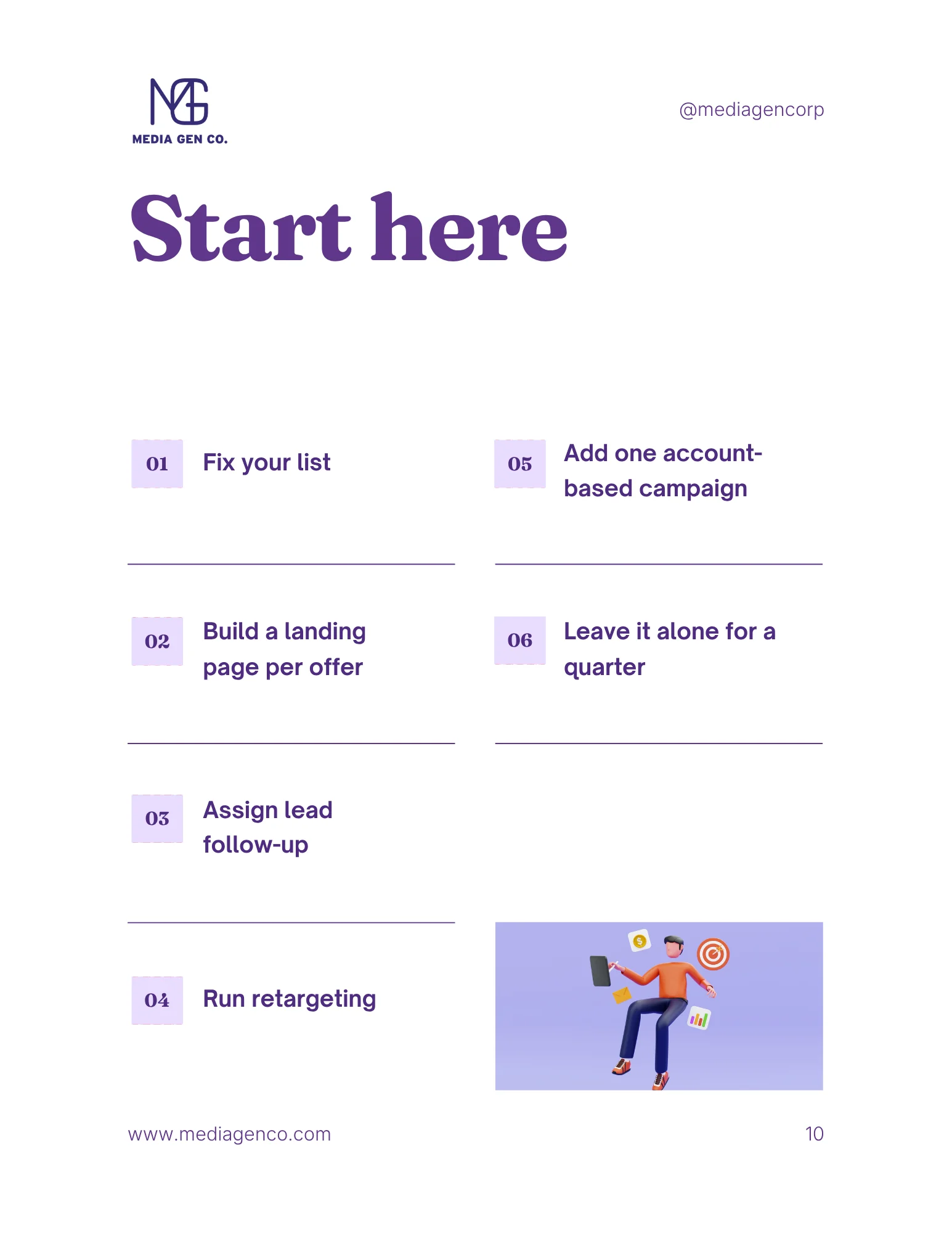
Start here
- Fix your list
- Build a landing page per offer
- Assign lead follow-up
- Run retargeting
- Add one account-based campaign
- Leave it alone for a quarter
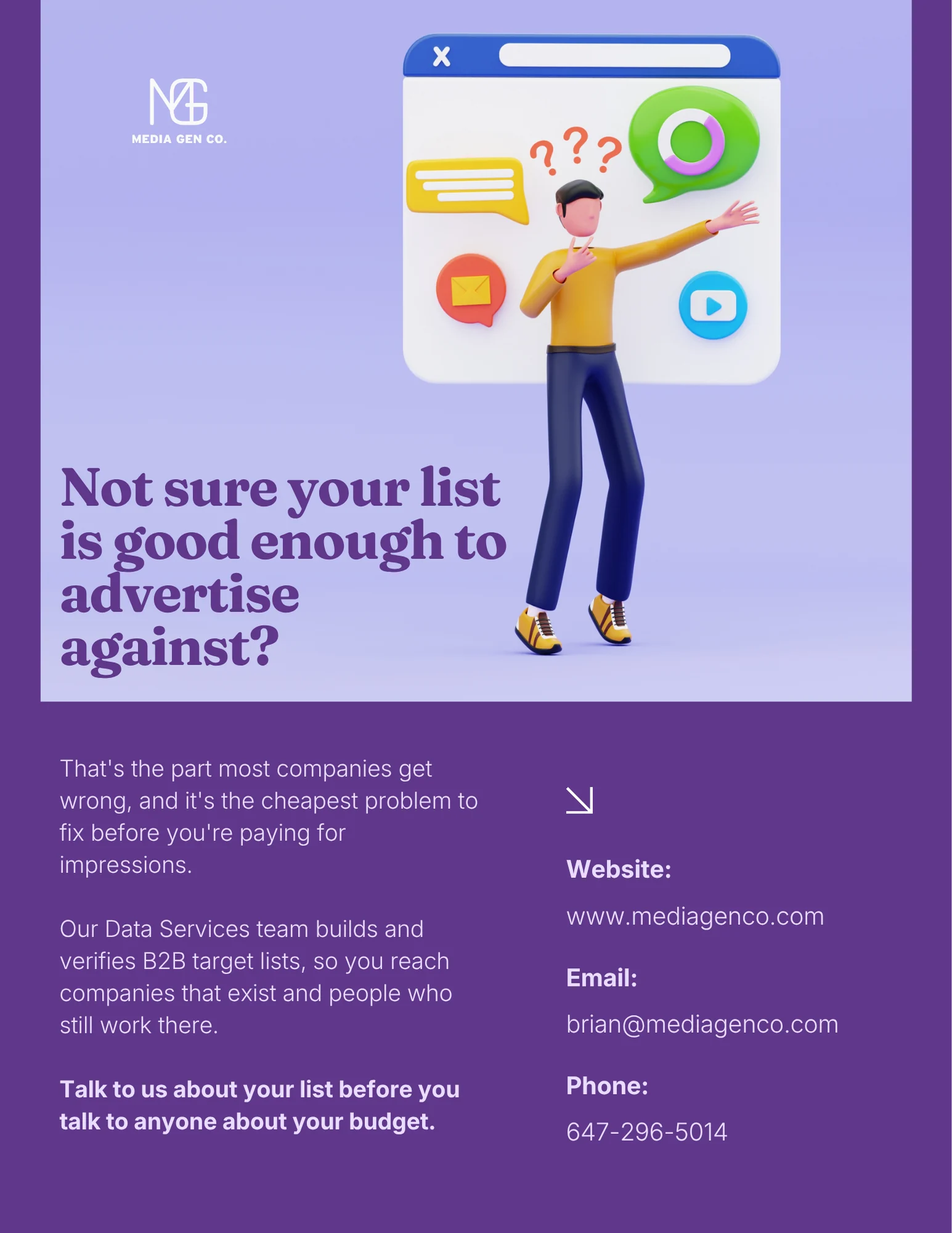
Not sure your list is good enough to advertise against?
That’s the part most companies get wrong, and it’s the cheapest problem to fix before you’re paying for impressions.
Our Data Services team builds and verifies B2B target lists, so you reach companies that exist and people who still work there.
Talk to us about your list before you talk to anyone about your budget.
Every page, as designed
The guide as our marketing team laid it out. Select a page to see it full size.
Related content


