
What Is B2B Programmatic Advertising, and Does Your Company Actually Need It?
Ask five people in a marketing meeting what “programmatic advertising” actually means, and you’ll get five different answers. At least one of them will just say “the AI ad thing” and hope nobody asks a follow-up question.
Here’s the real answer: programmatic advertising is automated ad buying. Instead of a person calling a publisher and negotiating ad space by hand, software handles the buying, targeting, and placement in real time. When someone visits a website, an auction happens in the background, in milliseconds, to decide which ad they see. No haggling, no insertion orders faxed back and forth. Just a system matching the right ad to the right visitor, instantly.
That’s it. That’s the whole concept underneath all the jargon.
The mechanism
How it actually plays out
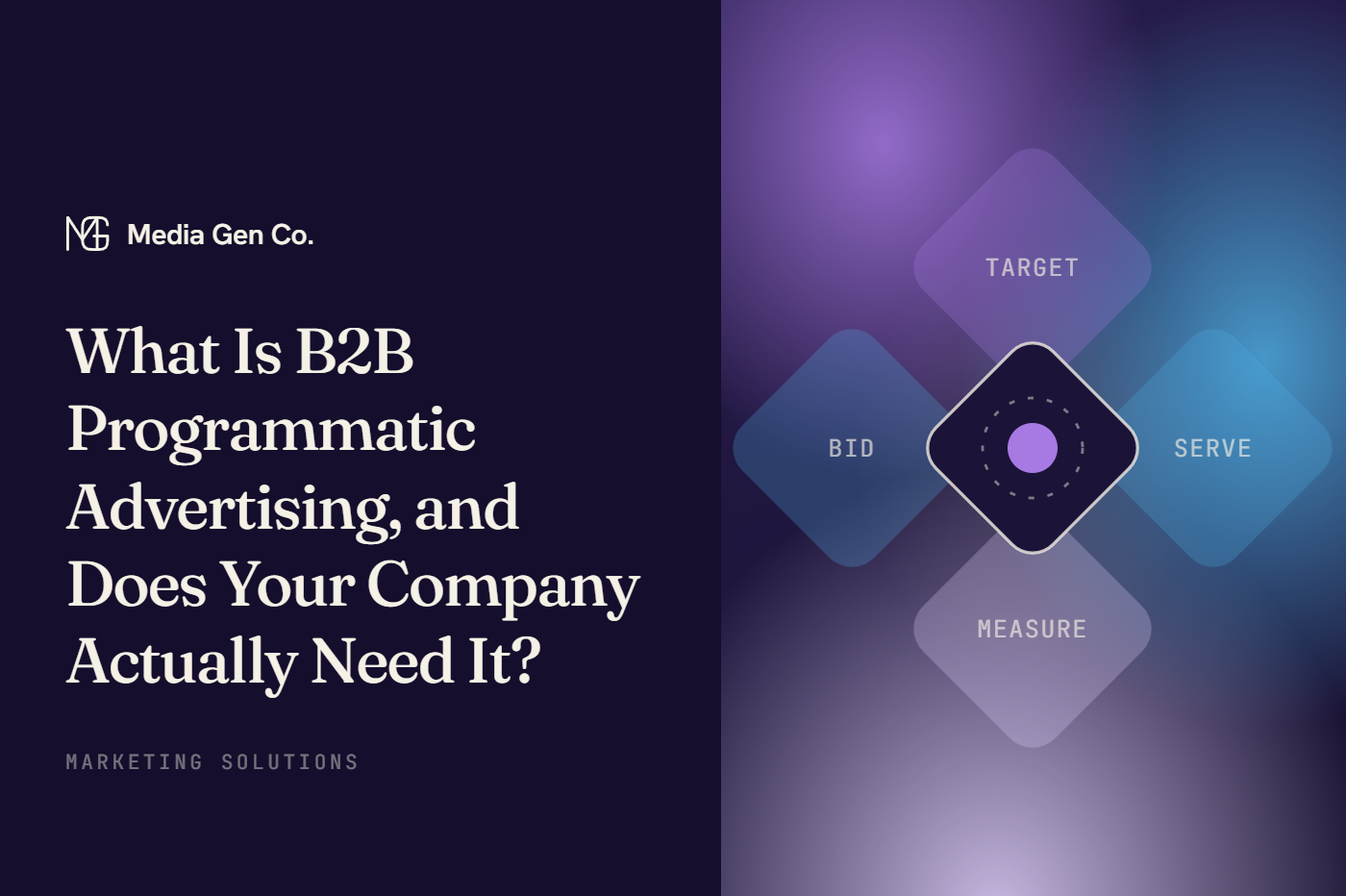
A campaign has three moving parts. First, targeting: who are you trying to reach, defined by things like company size, industry, or even what software a company already uses. Second, bidding: when someone matching that target shows up on a site, advertisers compete for that specific impression in an automated auction. Third, placement: the ad that wins gets shown, whether that’s a banner, a video, or something embedded in an article.
None of this is brand new technology. What’s changed is how precise the targeting has gotten, and how much of it now runs without a person approving every single decision.
B2B is not B2C
Why B2B is a different game than B2C
Consumer advertising is usually chasing one fast decision. Someone sees a shoe ad, they buy the shoe, done. B2B doesn’t work that way. Deals involve multiple people, take months to close, and rarely hinge on a single impression. Programmatic earns its keep here because it keeps a company visible to an entire buying committee over that whole stretch, not just to whoever happened to click once.
The decision
Should you actually run this?
Not every company is ready, and that’s fine. Worth being honest about a few things first: Do you actually know who you’re targeting, beyond “businesses that might like us”? Is your sales cycle long enough that staying visible over weeks or months matters? And is there enough budget to run a real test, not a token spend that gets eaten by platform fees before it does anything?
If those land as yes, programmatic can do real work as part of a bigger demand generation push. If not, there are usually cheaper, more direct channels worth trying first, and that’s a conversation worth having before committing budget to something flashy.
That’s the part that gets lost in a lot of programmatic pitches: it’s not magic, and it’s not a replacement for the rest of a strategy. It’s one more channel, and it performs exactly as well as the thinking that goes into it before launch.
Related content
Talk it through before you spend anything.
Thirty minutes with someone who has sold into these verticals for twenty-five years, and an honest answer about whether this is the right move for you.
Get new posts by email.
FAQ
What is B2B programmatic advertising?
Programmatic advertising buys display placements automatically against a defined business audience instead of a fixed publication slot. In B2B it is most useful when paired with account lists and firmographic targeting.
What is content syndication?
Content syndication places your white paper, case study, or e-book across the trade press your buyers already read. Every download becomes a named, qualified lead delivered to your team. It is the engine behind Media Gen's cost-per-lead programs.
Who does Media Gen work with?
Three groups: marketers who need demand (Marketing Solutions), sales teams who need data (Data Services), and B2B publishers who need revenue (Media Sales) - concentrated in engineering and industrial markets.
How do we start?
Book a 30-minute conversation, or send the contact form and we will come back to you. No pitch deck required - bring the problem.