
How Geofencing Helps You Reach Buyers at Trade Shows and Industry Events
For three days, a meaningful chunk of your best prospects are standing in the same building. Most companies respond to that by setting up a booth, stacking up some branded pens, and calling it a strategy. There’s a sharper way to use that window, and it doesn’t require anyone to walk past your table.
The boundary
The basic idea
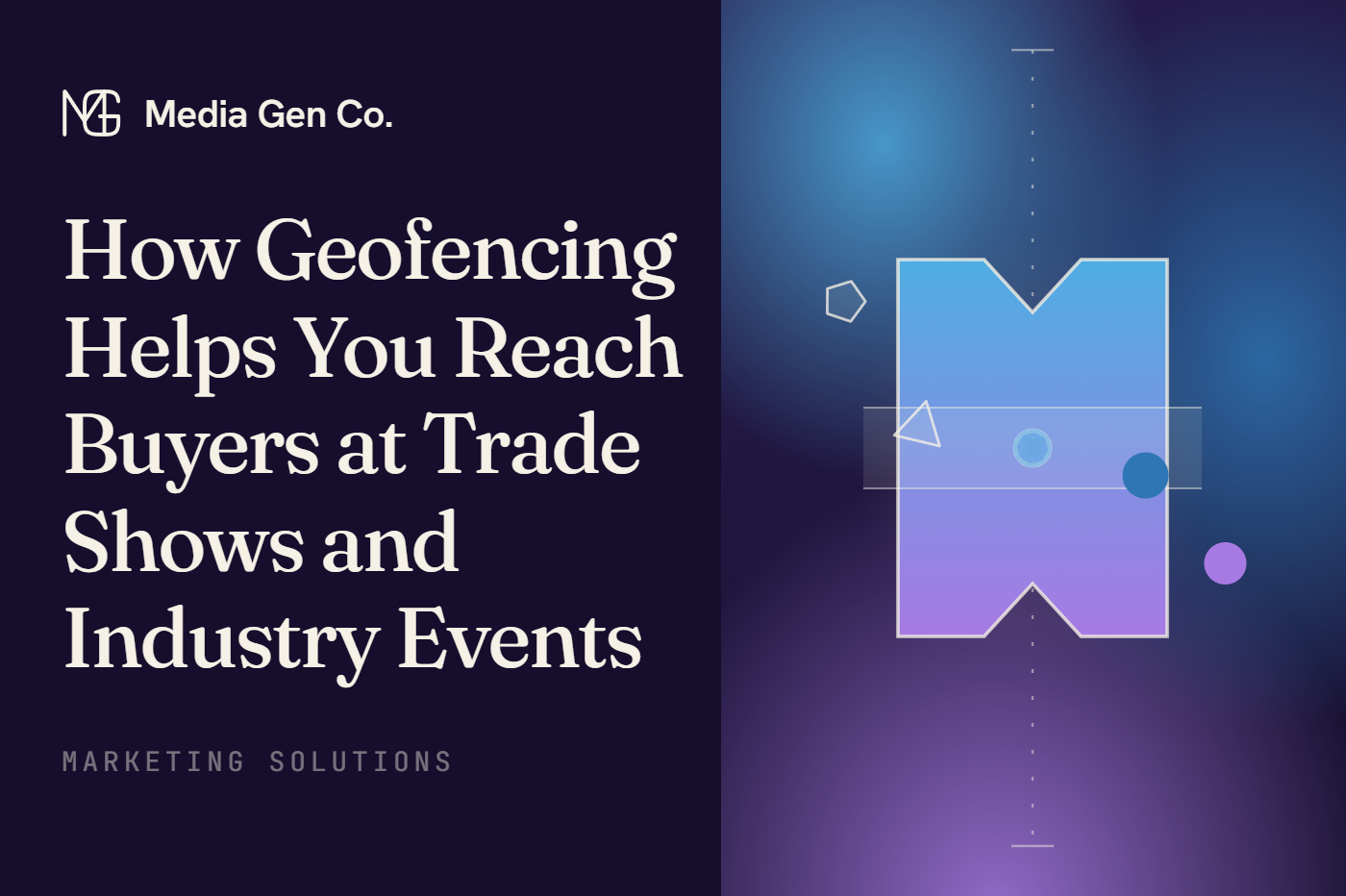
Geofencing is location-based advertising. Draw a virtual boundary around a physical place, like a convention center, a specific hall, or even a competitor’s booth, and when someone’s phone crosses into it, they can be served an ad. No special tracking device needed, just the location services most phones already have switched on.
What that looks like at an actual event
The geofence itself can be as broad as the whole venue or as narrow as one entrance. Timing matters just as much as the boundary. An ad that hits right as a keynote lets out, or during a lunch break when everyone’s staring at their phone anyway, lands differently than one that’s just always on in the background. And the campaign doesn’t have to end when the show does. Retargeting people who were inside that geofence for weeks afterward keeps a brand in front of them well past the last day.
Precision
Why precision beats reach here
A generic ad shown to a broad audience gets scrolled past without a second thought. An ad shown to someone standing fifty feet from a specific booth, at the right moment, reads as relevant instead of random. That gap, between “random ad” and “this feels aimed at me,” is the whole advantage geofencing has over broader digital placements.
The data layer
The part most companies skip
Geofencing gets a lot sharper when it’s paired with actually knowing who’s in the building, not just where they are. Knowing which companies are exhibiting, and who from those companies tends to show up, turns a generic geofence into something closer to a targeted list.
That’s not a small distinction. A campaign built on “everyone within a mile of the convention center” is a shotgun. A campaign built on “everyone from these forty companies, in this hall, this week” is closer to a rifle. Same tool, very different results, depending on whether the audience behind it was actually mapped out ahead of time.
Related content
Talk it through before you spend anything.
Thirty minutes with someone who has sold into these verticals for twenty-five years, and an honest answer about whether this is the right move for you.
Get new posts by email.
FAQ
How does geofencing work for trade shows?
Geofencing draws a virtual boundary around a venue and serves ads to the devices inside it - the exhibitors and attendees at the show - during and after the event. It turns physical presence into an addressable audience.
What is geofencing?
Drawing a virtual boundary around a place, such as a trade-show venue, and serving ads to the devices inside it during and after the event. It turns physical presence into an addressable audience.
What is trade show exhibitor data?
The public directory of who is exhibiting at a show - companies, booth numbers, categories - collected, cleaned, and matched into an account plan a sales team can walk the floor with.
Who does Media Gen work with?
Three groups: marketers who need demand (Marketing Solutions), sales teams who need data (Data Services), and B2B publishers who need revenue (Media Sales) - concentrated in engineering and industrial markets.
How do we start?
Book a 30-minute conversation, or send the contact form and we will come back to you. No pitch deck required - bring the problem.